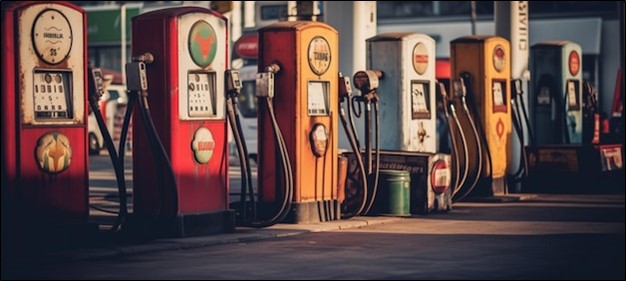
How many times do you let the gas pump handle click when you’re filling your gas tank? Do you like to round off the cost to the nearest dollar? Maybe you like to make sure your tank is as full as it can get, and keep clicking the handle until it doesn’t pump anymore? Or do you have some special system where you fill it until it clicks, wait 30 seconds, then click it again, and continue until you’ve reached precisely three clicks of the pump handle? I’ve found that it varies depending on who you ask, but what is the right way to fill your gas tank? Well, today is your lucky day because we’re going to answer that question and provide you with some interesting knowledge along the way.
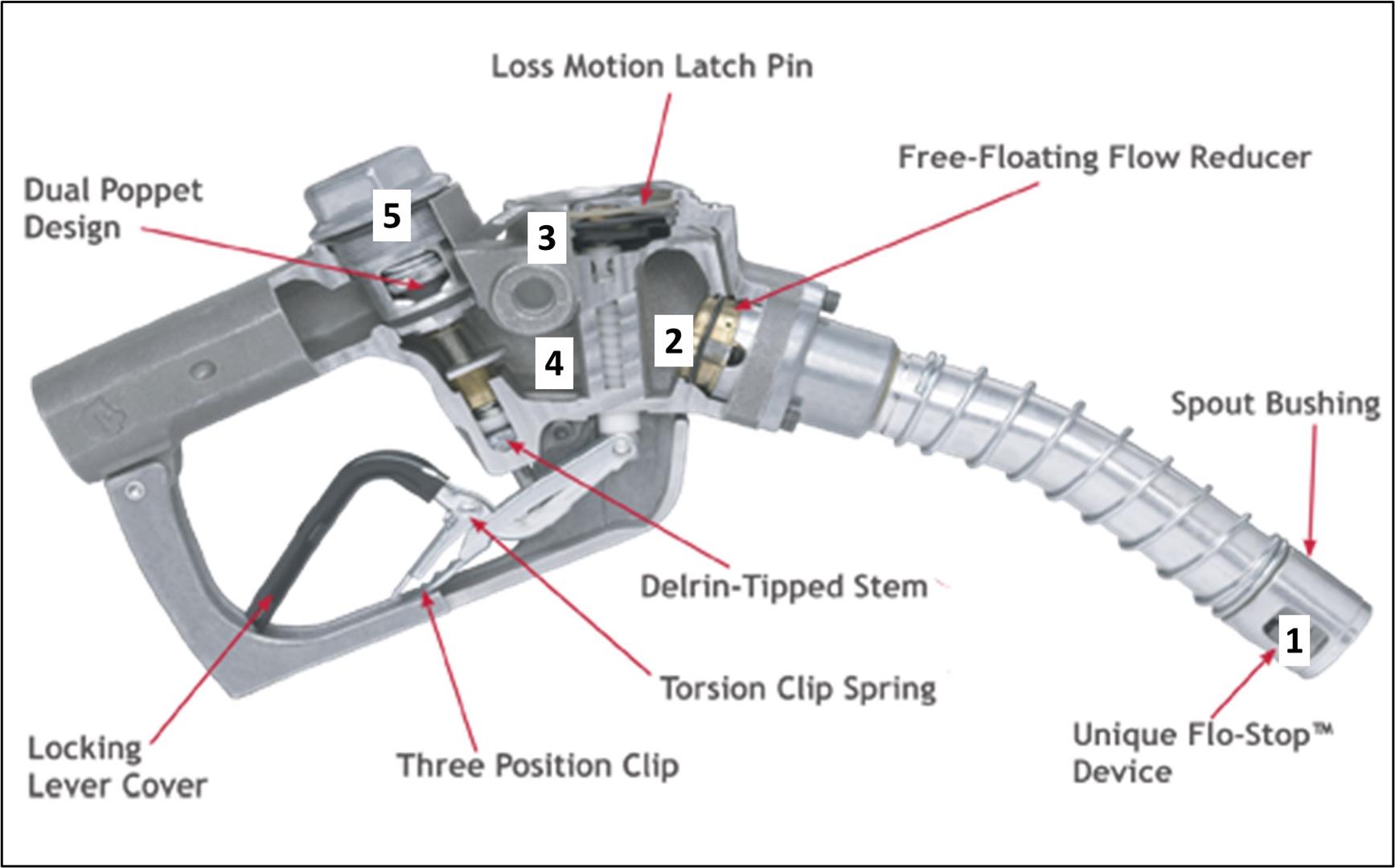
To fully unpack the conundrum of filling your gas tank, we need to understand how the gas pump handle clicks off in the first place. The fuel fill nozzle was first developed in 1938 by Richard C. Corson. It’s an elegant example of a completely mechanical design that uses the fuel flowing through the nozzle to function. It has remained virtually unchanged since 1940 and it’s currently the industry standard used throughout the world. It operates like this; as fuel/gas is pumped through the nozzle, it is forced through a restriction called a venturi (Illustration #2). As the gas passes through the venturi (2) it speeds up and draws a vacuum on loss motion latch pin diaphragm (3) pulling air in through the small hole (1) on the end of the nozzle. Where there is a small tube attached to the hole (1) that runs back up the nozzle to the venturi (2) and loss motion latch diaphragm (3). When the liquid gas in your tank foams up and reaches the small hole (1) on the end of the nozzle, it prevents air from entering and causes an immediate vacuum spike on the loss motion latch pin (3) causing it to trip and shut off the fuel flow. The dual poppet (5) is an additional shut off that provides an added measure of safety to prevent unwanted gas flow. When your tank is full it trips both poppets, which are heard and felt by the gas pumper. Thus, preventing the gas from spilling out on the ground and overfilling the gas tank. An ingenious mechanical design used throughout the world to solve a real-world problem.
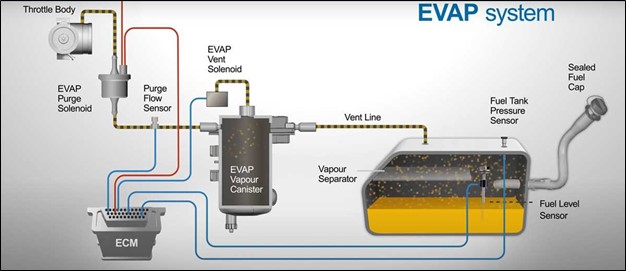
The key to understanding when to stop filling your gas tank has to do with the EVAP (Evaporative Emission Control) System. The job of the EVAP System is to control the fuel vapors in your gas tank and prevent them from venting to the atmosphere. There are three components that allow the EVAP system to function properly: the vent valve (solenoid), carbon canister (vapor canister), and purge valve (solenoid). When you fill the tank with fuel, the vent valve is open. Gas entering the tank pushes the fuel vapor from the tank through the carbon canister, which catches the hydrocarbons, and vents through the vent valve as clean air. When driving the vehicle, the purge valve opens, the fuel vapors (hydrocarbons) trapped in the carbon canister are drawn into the engine from engine vacuum and consumed along with the liquid gas delivered to the engine. There are two prevalent problems that cause the EVAP system not to function properly. First, the vent valve and carbon canister can plug up with road dust. Primarily from driving on gravel roads. The plugged components cause the gas nozzle to click off before the tank is full because of the pressure build-up in the gas tank. It can make it almost impossible to fill your vehicle with gas. The second common problem is a side effect of the location of the carbon canister, usually mounted under the vehicle near the gas tank. The carbon canisters’ job is to temporarily trap and store unburnt fuel vapors until the engine has a chance to consume them. They do a very good job of storing the hydrocarbons. What they don’t do well is store liquid gas. Liquid gas plugs them up and the only way to fix the problem is to replace the carbon canister. The same goes when they get plugged up with road dust, replacement is required to correct the issue.
That brings us back to the original question about knowing when to stop filling your gas tank at the pump. The gas pump nozzle technology has remained virtually unchanged since the 1940’s and manufacturers have designed the fuel tank and EVAP systems around how the gas pump nozzle functions. They have determined that the first click of the fuel pump handle, with the handle set on low, is where you should stop. That’s it, just one click. If you should continue to fill your gas tank after that point, you’re likely to contaminate your carbon canister with liquid fuel. Which can lead to a check engine light, poor filling characteristics, and the need for expensive part replacements. So, trying to squeeze in that extra bit of fuel during fill-ups can cost you a lot of money, frustration, and waste time in the future. Next time you fill your vehicle with gas, stop at one click, then look around and enjoy being the smartest person in the gas lane!
Aaron Bjorklund