
Prone to Wander – The Value of a Proper Wheel Alignment
Have you experienced the terror of driving an old truck with excessive play in the steering? You’re trying to maintain your lane on the highway while frantically turning the steering wheel back and forth a full quarter turn before the vehicle responds. Feeling like you’re playing bumper cars with the painted lines trying desperately to avoid any road construction situations. Maybe it’s the family car that pulls so hard that if you take your hands off the wheel for just a moment, you’ll shoot into the other lane of traffic. You detest driving it because of the pull, but you don’t have another choice. How about driving your motorhome in the wind? White knuckles gripping the steering wheel tightly trying desperately to just stay on the road, cold sweat running down your back while you’re questioning your life choices and trying not to puke. Maybe it’s an expensive set of tires that you just wore out in less than 10,000 miles because you thought the alignment was ok and now you’re trying to come up with another $1200 just to keep the truck safe to drive. Driving a vehicle with alignment or steering issues can be dangerous and expensive. You don’t need that kind of stress in your life! Let’s check out what’s involved in a vehicle alignment and how it can improve your driving experience.
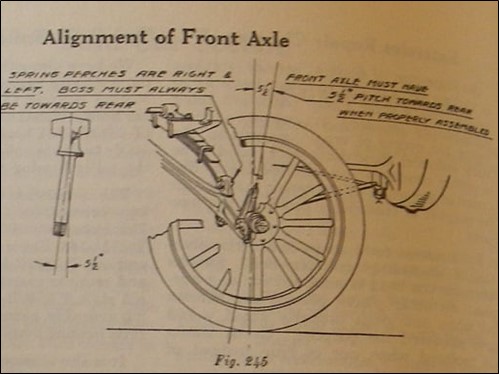
Vehicles have been getting wheel alignments since vehicles were first developed. Due to the design of the early narrow wheels and tires, wheel alignments were completed using strings and tape measures. Their primary goal was to keep the vehicle driving straight. It was a process that those of us in the industry call “Certified good enough”. As vehicle suspension systems and tire designs improved, so did the technology used to measure the wheel alignments. Most modern wheel alignment machines use advanced camera and target technology to precisely measure the position of each tire/wheel assembly. Alignment specifications are unique for each make and model and are developed by each vehicle manufacturer to provide the best driving experience, promote tire longevity, and maximize fuel efficiency. A properly aligned modern vehicle is a joy to drive.
Let’s look at what’s measured during a wheel alignment and how it’s adjusted. During a four-wheel vehicle alignment, the technician is looking at five to six specifications, caster, camber, toe, thrust angle, steering angle, and sometimes frame rake. The alignment machine displays the measurements in degrees. Adjustments are completed by moving steering and suspension components with precise mechanical adjustments. Depending on the system design, minor adjustments can have a dramatic effect on the tire/wheel location. This is why it is a good idea to have your wheel alignment checked annually. Your steering and suspension systems take quite a beating throughout the year on our local streets. Yes, I’m referring to that beachball sized pothole you torpedoed yesterday. There are two additional bonus alignment considerations worth mentioning that affect vehicle drivability but are not directly measured during wheel alignments. That is the scrub radius and the Ackermann angle. I will explain both below.
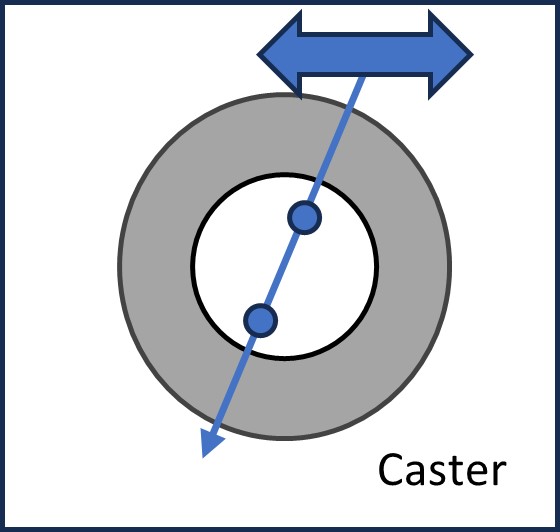
Caster – Caster is measured as a line from the upper ball joint or upper strut mount through the lower ball joint to the ground as viewed from the side of the vehicle. Caster affects how the vehicle’s steering wheel returns to center during turns and how it tracks down the road. Think of the front wheel of a motorcycle. How the steering is racked back to promote stability. More caster can improve the return to center but too much caster will make the vehicle resist turns. Caster needs to be balanced from side to side to keep the vehicle from drifting when driving.
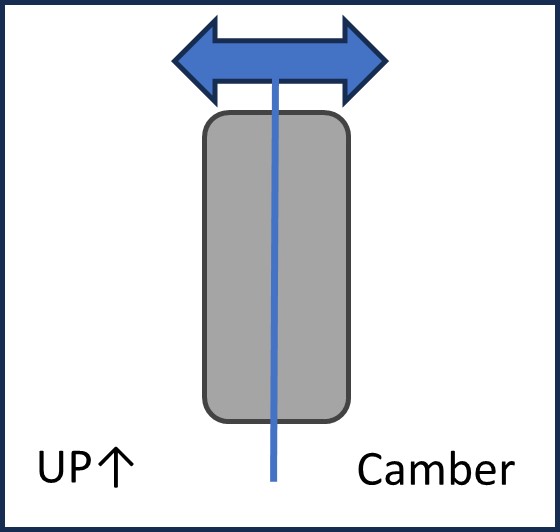
Camber – Camber measures how much the top of the tire leans in and out in relation to the vehicle body. Looking at it from the back of the vehicle, 0° camber would be a tire that is straight up and down. Positive camber has the top of the tire leaning out from the vehicle body and negitive camber is the top of the tire leaning into the vehicle. Negative camber makes the vehicle more stable, while positive camber improves cornering, like a motorcycle leaning into a turn. Both excessivly positive or negative camber will put additional pressure on the edge of the tire, which can lead to tire edge
wear.
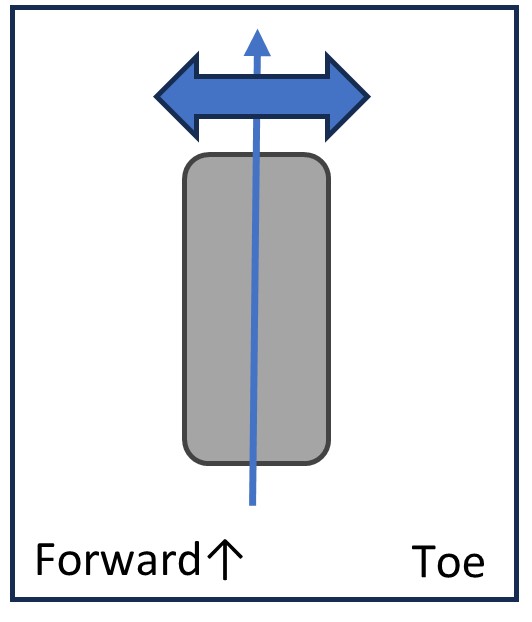
Toe – Toe measures how much the front of the tires point in or out from the vehicle as viewed from above the vehicle. Positive toe is the front of the tire pointed in towards the center line of the vehicle and negative toe is when the front of the tire is pointed out. A little positive toe improves vehicle stability while negative toe can create a vehicle that feels twitchy or jumpy to drive. Making it feel like it wants to dart back and forth. Misadjusted toe is the greatest culpret of accelerated tire wear. Instead of the tire rolling straight down the road, it rolls at a slight angle, scrubbing the surface of the tire off. Visualize driving your vehicle with a strong side wind and having to turn the steering wheel into the wind to remain traveling in a straight line. That tire scrub wears the tire and reduces your fuel economy.
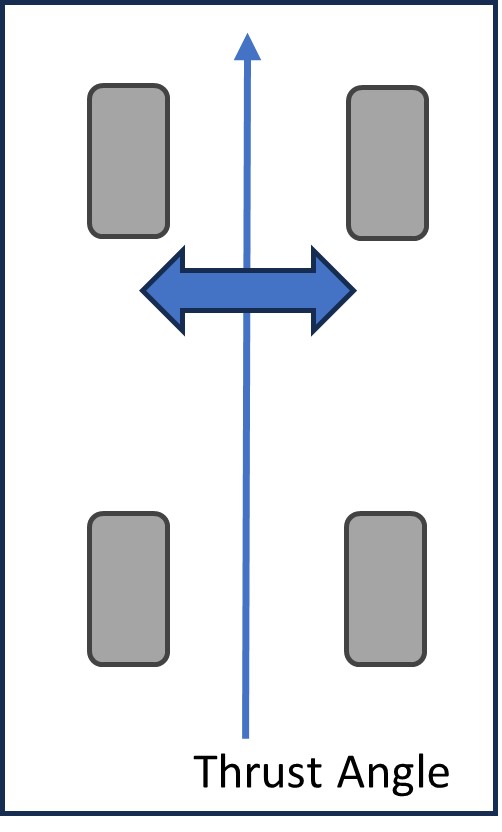
Thrust Angle – Thrust angle looks at the relation of the front and rear axles to each other and their tendancy to travel with the steering wheel held straight. What direction will the vehicle want to naturally travel. Looking at the thrust angle can help identify bent, broken, or crash damaged parts. A quality wheel alignment will always take into account the thrust angle of the vehicle. Four wheel vehicle alignments account for thrust angle.
Steering Angle – Steering angle is measured by a sensor in your steering column and is used by the computer to locate the steering wheel position. The steering wheel position is used by the traction control, anti-lock brake, and some ADAS (Advanced Driver Assistance Systems) as part of their programs. The steering wheel position needs to be recalibrated after completing the alignment on many vehicles.
Frame Rake – Frame rake is how much the frame is angled down towards the front of the vehicle, measured in degrees. Most vehicles sit slightly lower in the front to improve fuel economy and vehicle stability at higher road speeds. A hotrod with the rear end jacked up in the air can affect the caster, steering return to center, and vehicle driveability. Although, the cool factor and offset the negative aspects of a “raked” out vehicle. Unlike the “Carolina squat” look which makes a vehicle almost undriveable and leads people to question your life choices.
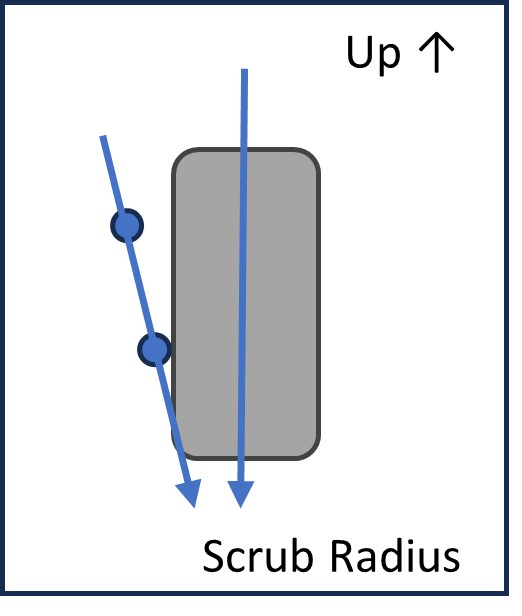
Scrub Radius – Like caster, the scrub radius draws a line from the upper ball joint or upper strut mount through the lower ball joint to the ground. This time we are looking at the tire from the front of the vehicle. The scrub radius is the difference between the center line of the tire and ground contact location of the steering radius line. A positive scrub radius is when the steering radius line intersects the ground inside or towards the vehicle center line of the tire center line. Negative scrub radius is the opposite. The scrub radius is most affected by wheel offset, tire spacers, and tire diameter. The farther the steering radius line deviates from the center of the tire, the more it can increase your steering effort and can cause instability. In other words, those stacked wheel spacers and fat, low profile tires might make your vehicle “look cool”, but can cause terrible vehicle handling.
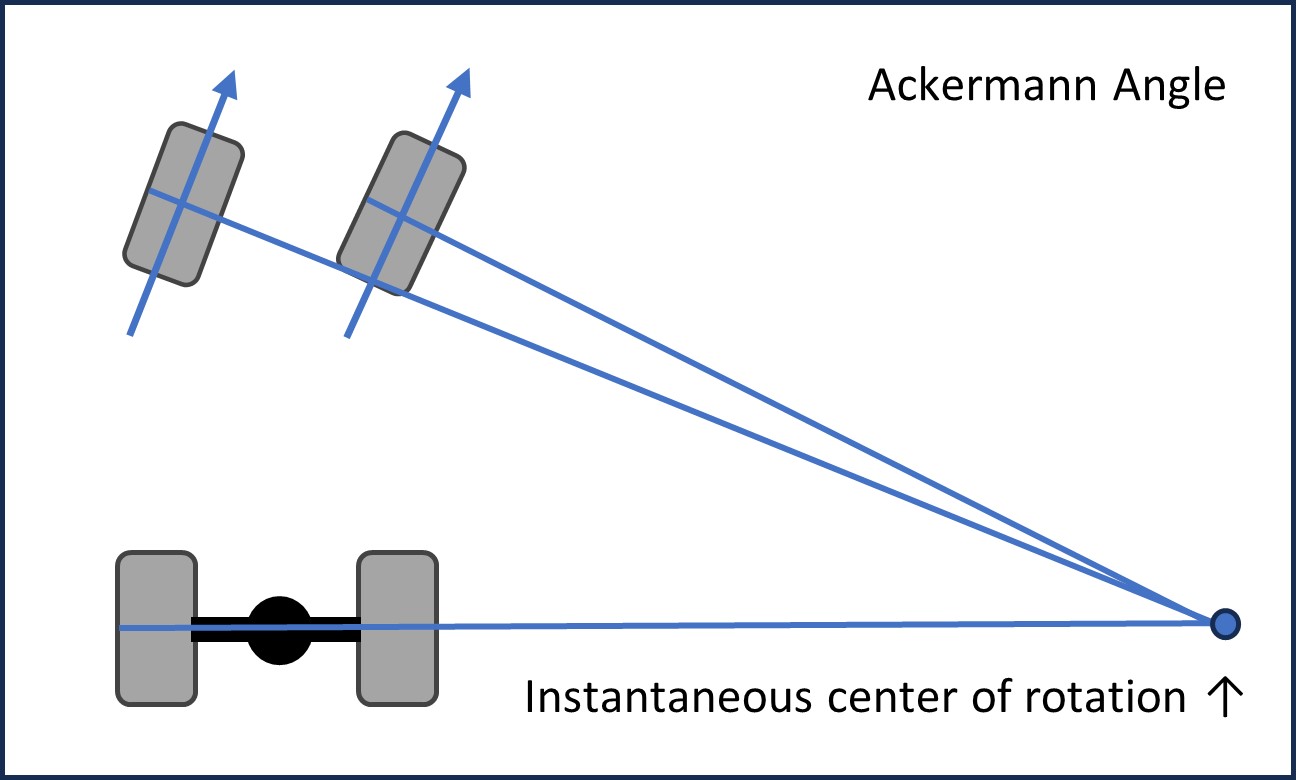
Ackermann Angle – The Ackermann angle is based on the idea that when turning, the tire on the inside of the turn needs to turn in more than the tire on the outside. The turn pivots around the instantaneous center of roatation. The staggerd turning angles promotes smooth and controlled vehicle handling during cornering. When all of the lines intersect at the same point it reduces additional tire wear when turning.
Now that you’re familiar with the mechanical aspects of a four-wheel alignment, it’s time to look at the electronic side of the alignment process. Systems like anti-lock brakes, stability control, lane assist, and other ADAS (Advanced Driver Assistance Systems) are all affected by changes in the vehicle wheel alignment. Sensors like the steering angle (a.k.a. steering wheel position), forward-facing cameras, or radar systems may need to be calibrated upon completion of the alignment. It depends on the vehicle design, the systems the vehicle is equipped with, and how much adjustment is required to bring the vehicle into proper manufacturer specifications. If your vehicle was involved in an accident, the likelihood of needing additional system calibrations is much higher.
As you can see, many factors are considered during a modern four-wheel alignment. Each plays a part in how your vehicle handles, how the tires wear, and your overall fuel economy. Keeping the vehicle properly aligned is an important part of maintaining your vehicle’s safety and reliability. Which is why we recommend having your vehicle alignment checked every year.
Aaron Bjorklund