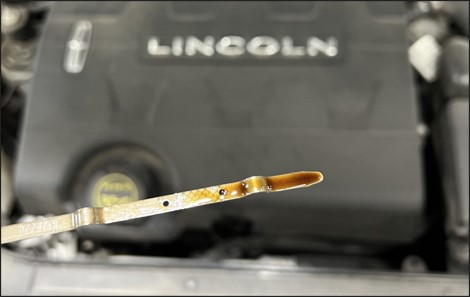
Today, we’re going to take on a subject that’s rarely talked about anymore. It used to be a common skill that everyone had that is now overlooked because of the reliability of modern engines. The constant push for extreme fuel efficiency has now created engine designs that require us to bring back the simple art of checking your engine oil level. Let’s explore the reasons you should learn or relearn this task and how to do it. The fact is that many people have never had someone take the time to explain this to them. Today is your lucky day! Let’s start by answering the following questions.
- Do you know why you should check your oil level?
- Do you know how to check your engine oil level?
- Do you know when to check your oil level?
- Do you know what type of oil your vehicle engine takes?
- Do you know what happens to your engine if your oil level is low?
If you answered “No” or “I don’t know” to any of the questions above, then this article is for you. Don’t worry, it’s ok not to know. That’s why you’re here. The first question to answer is why. Why should you check your engine oil level? In a perfect world, the engine oil level shouldn’t change between oil changes. Unfortunately, we don’t live in a perfect world. Engines can leak oil, consume oil, and swap fluids between systems. Most people think that if there’s a leak, then they would see it leaking on the ground. Many times, it can get captured by engine shields and/or covers or burns off before reaching the ground. Additionally, a slow oil leak can cook down, thicken, and mix with dirt and just build up on the outside of the engine. Any of these scenarios can prevent the oil from dripping on the ground. The opposite of a leaking engine is one that consumes the oil instead of leaking externally. An engine that burns oil would traditionally puff blue smoke from the tail pipe. Modern vehicles can mask the tail pipe smoke due to the emissions system in the exhaust system. Over time, the burnt oil will most certainly negatively affect the life expectancy of the catalytic converter. Then, there’s always the possibility of a vehicle equipped with an engine oil cooler that starts to leak oil into the coolant or coolant into the oil. Fluid typically moves from high pressure to low pressure. Either case can cause costly damage to your engine. Periodically checking your engine's oil level is the best way to identify an issue before it becomes a serious and costly problem. A little-known fact is that some vehicle manufacturers consider oil consumption rates up to one quart per 1000 miles normal. As a professional technician, oil consumption more than one quart per 3000 miles has me looking for potential problem areas. As I stated above, an engine consuming excessive amounts of oil can lead to premature catalytic converter failure and/or complete engine failure. Our goal is to solve problems before they become expensive.
We talked about the fact that some engines start to consume oil. Two great follow up questions are, “Why do they consume oil?" and "What happens when an engine runs low on oil?” The primary function of engine oil is to provide a slippery protective film between moving internal engine parts, protecting them from self-destruction. Many modern engines also use pressurized oil to power variable valve timing actuators, chain tensioners, and/or fuel injectors. Engine oil consists of the base oil plus additive packages that enhance the oil's ability to lubricate, clean, prevent foaming, and hold up to harsh environment inside an engine. Oil consumption is caused by a mechanical component or sealing failure. For example, low tension piston rings, used in many direct fuel injection engines to enhance fuel efficiency, can stick from carbon build up due to extended oil change intervals. This causes the engine to consume oil. When the engine is allowed to run with a low oil level for extended periods, it will magnify the oil consumption rate because of increased oil sludge and carbon build-up. A failing turbo can be a source of significant oil consumption as they use engine oil to lubricate the impeller bearings. Another system that can cause excessive oil consumption is a compromised PCV (Positive Crankcase Ventilation) system, which can cause the engine to suck the oil from the crankcase. Any of these examples can cause the engine oil level to significantly deplete between oil changes. Always maintaining the proper engine oil level and condition is critical to the longevity of your vehicle's engine.
Next, let's discuss when to check your oil. When depends on your particular vehicle. First, you need to take some time to learn about your vehicle. Start with checking your oil every two or three times you stop to fill the vehicle with gas or diesel. If the oil level stays consistent throughout the month, then you can stretch out the intervals between oil level checks. Much of this depends on how much you drive the vehicle, the vehicle's maintenance history, and current condition of the vehicle. The best practice, at a minimum, is to check the oil level monthly. Yes, your engine may not use any oil between oil changes, but what if something starts to fail? The goal is to identify an issue and deal with it before it becomes costly.
Checking your oil level on most vehicles is a quick and easy procedure. Let's walk through it step by step.
- Park the vehicle on a level surface. (Gas stations are usually quite level.)
- Turn the engine off and let it sit for several minutes. (This is a great time to fill your vehicle with gas or diesel.)
- Open the hood.
- Locate the oil level dipstick. It usually has a yellow handle.
- Have a rag or paper towel ready. Pull the dipstick out and wipe it off.
- Insert the dipstick and fully seat the handle.
- Pull the dipstick out and see where the oil level sits on the dipstick. Most dipsticks have a crosshatched area and/or holes in the dipstick that denotes the normal operating range. The oil should be light brown in color. If it looks very dark and black, you may be overdue for an oil change.
- If the oil level is below the bottom add mark, add small amounts of the correct oil to bring the oil level within the normal operational range. Look at the oil fill cap, or check the vehicle owner's manual, or call your servicing shop to identify the correct oil to put in your vehicle engine. Don't exceed the full mark because that can cause other problems.
- Recheck your oil level after topping it off.
- Have a wonderful day knowing that you're taking good care of your vehicle.
It really is that easy and only takes a couple of minutes to check. If the oil level starts to drop significantly and you are adding oil often, make an appointment at your local automotive repair facility to have it checked out. Many costly repairs can be avoided if you identify decreasing oil levels right away. Running an engine very low or out of oil can lead to complete engine failure! Nobody wants that kind of trouble in their lives. Check your oil often and regularly.